


Why Cybersecurity Is So Hard to Get Right: The 7 Challenges Breaking Modern Security Operation
What You Need to Know
- Seven fundamental challenges make cybersecurity difficult to get right, and they compound against each other.
- The challenges fall into three themes: cracks in the foundation, the human factor paradox, and the high cost of safety.
- The traditional MSSP model functions as an alarm system, not a security operation, leaving response burden on already-overwhelmed teams.
- The MCOP model and Cybersecurity Operations 2.0 framework treat security as a continuous, coordinated operation, not a collection of parts.
- The City of Aurora, IL demonstrated this works: 35,000+ threats detected, 351 high-severity eliminated, zero major incidents, 77% cost reduction.
- Watch or listen to Episode 8 of The Cyber Resilience Report for the full discussion: YouTube or Spotify
Why do cybersecurity programs fail even when organizations are investing in security?
Cybersecurity programs fail primarily because the model underlying them was never designed for today's threat level or organizational constraints. Seven structural challenges (spanning misaligned strategy, overwhelmed human teams, a global workforce shortage, and cost structures that compound faster than budgets grow) explain why even well-funded organizations remain exposed. The solution is not more tools or more headcount. It is treating cybersecurity as a continuous, coordinated operation rather than a collection of independent components.
Here is a question every leader of a mission-critical organization should be asking: Why do so many organizations, even ones investing heavily in cybersecurity, still struggle to defend against modern threats?
The instinct is to blame budget, staffing, nor the sophistication of the attacks. But those answers, while not wrong, miss the deeper problem. For SLTT governments, healthcare systems, and 501(c)(3) nonprofits, the real answer is structural. The cybersecurity model most organizations rely on was never designed for the threat level they now face, or the consequences of getting it wrong.
Seven fundamental challenges explain why. They fall into three compounding themes. And they share a single root cause: cybersecurity has been built as a collection of parts, not a unified operation.
Theme One: Cracks in the Foundation
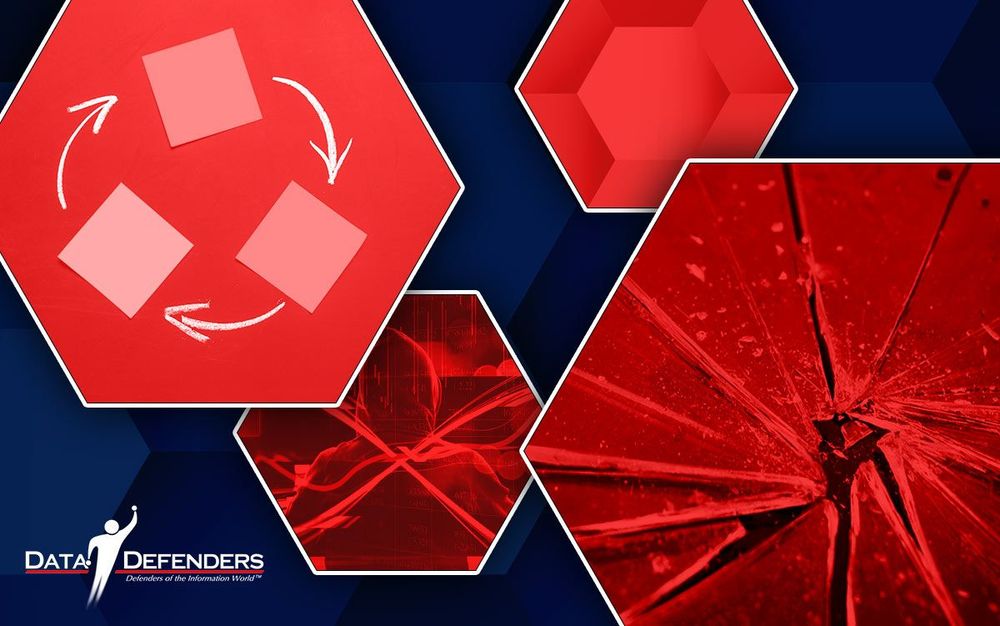
The first two challenges are strategic failures that exist before any attack arrives. Security operations misaligned with business maturity create exploitable gaps from day one. Lifecycle components that don't communicate produce an organization that is structurally incapable of effective threat mitigation regardless of how much it spends on individual tools.
The first two challenges live at the strategic layer, before any attack arrives, before any alert fires. They are failures of design, not execution.
Challenge 1: Security Operations Are Not Aligned With Business Maturity
Most organizations have a cybersecurity program. Far fewer have one that actually matches where the organization is. Governance, technical infrastructure, and process and procedure are the three lifecycle components of any security operation. In theory, they work together. In practice, they are frequently implemented at different times, under different leadership, with different priorities, and they end up out of balance with each other and misaligned with the organization's actual maturity level.
This happens for familiar reasons: lack of strategic planning, inconsistent funding cycles, and leadership changes that reset priorities mid-implementation. The result is a security posture that looks complete on paper but contains gaps that attackers can and do exploit.
For municipalities managing aging infrastructure, hospitals balancing patient care with IT modernization, and nonprofits operating on restricted budgets, this misalignment is not an exception. It is the norm.
Challenge 2: Information Sharing Between Lifecycle Components Is Disjointed
Even when all three lifecycle components are present, they frequently do not communicate with each other. Events and activities in one component (a governance decision, a technical incident, a process change) are never shared with the others. Each component operates independently, with its own data, its own reporting, and its own blind spots.
When lifecycle components are imbalanced or misaligned in this way, the cybersecurity lifecycle breaks. The result is an organization that is inefficient at best and incapable of effective threat mitigation at worst, not because it lacks resources or commitment, but because the parts of its security program were never designed to function as a system.
Theme Two: The Human Factor Paradox
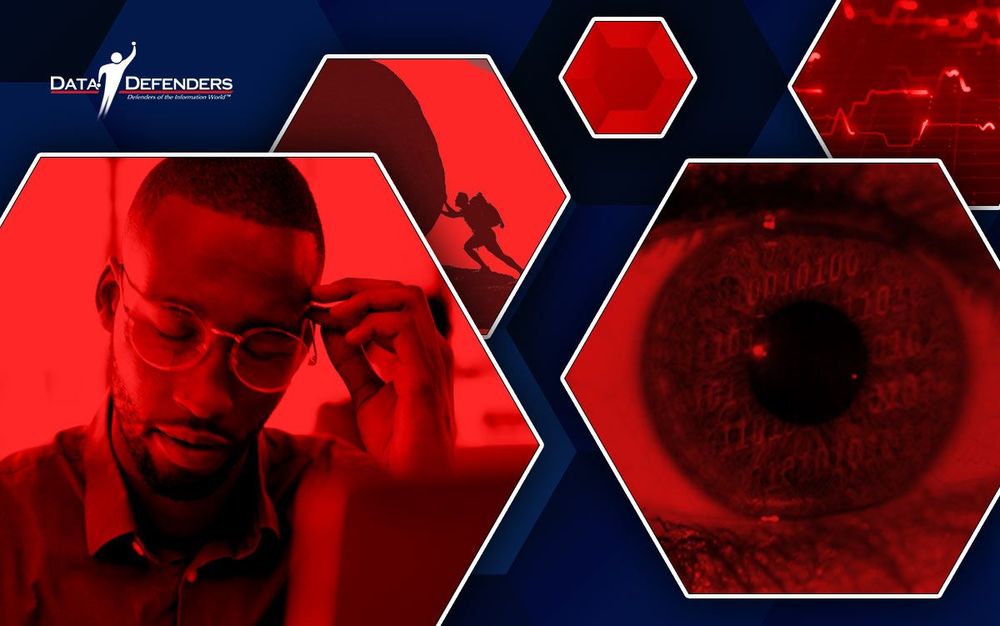
Security teams are simultaneously the most critical component of any cybersecurity operation and the component most likely to become its limiting constraint. Three challenges compound this paradox: teams are overwhelmed by data volume, operations are structurally over-reliant on human processing capacity, and the workforce needed to staff the old model at scale does not exist in sufficient supply.
The next three challenges center on the human element, the security team at the heart of every organization's cybersecurity operation.
Challenge 3: The Human Element Is Overwhelmed
Security teams act as the main arbiter and clearinghouse of critical cybersecurity data. They aggregate, correlate, analyze, and decide based on information received continuously from point solutions across the security infrastructure. That is a significant cognitive load under normal conditions. Under the data volumes that modern security environments generate, it becomes an impossible one.
The human brain simply cannot react and respond to this volume of data fast enough to create actionable, contextualized intelligence from it. When real threat signals are drowned out by the volume of noise, breaches are not caught in time. They are discovered after the fact, the worst possible outcome for an organization responsible for protecting patient records, citizen data, or community services.
Challenge 4: Operations Depend Too Heavily on the Human Element
The structural problem compounds when you consider what the human element is being asked to do. Today's cybersecurity operations depend heavily on people to aggregate data, correlate signals, analyze patterns, make decisions, and execute responses, all of it, all the time. That same team also manages cybersecurity policy development, governance oversight, compliance benchmarking, technical controls implementation, incident response, and automation management.
No organization has enough skilled professionals to fill this role at the scale it demands. The ones that come closest are large enterprises with security budgets that most SLTT governments, healthcare systems, and nonprofits will never approach.
Challenge 5: The Cybersecurity Workforce Shortage Is Structural
The global cybersecurity workforce gap is not closing. In the United States alone, the shortage runs into the hundreds of thousands of skilled workers. There simply are not enough qualified professionals to fill the positions today's organizations need, and the organizations with the least competitive compensation packages, which frequently includes mission-driven public and nonprofit institutions, are the ones least able to attract and retain the talent they do find.
High demand also drives up the value of existing talent, adding a premium to an already constrained budget environment. Organizations that build their security model around headcount they cannot find, or cannot retain once hired, are not building a security operation. They are building a dependency on a resource that does not exist in sufficient supply.
Theme Three: The High Cost of Safety
The traditional cybersecurity model becomes progressively more expensive over time while delivering diminishing protection. Point solution sprawl adds complexity without adding proportional security. Cumulative costs (tool licensing, workforce premiums driven by shortage-level demand), integration overhead, make the status quo financially unsustainable for 95% of US municipalities and most mission-critical organizations operating on constrained budgets.
The final two challenges are economic, but they are driven by everything that came before them.
Challenge 6: Point Solution Sprawl Compounds Cost Without Compounding Protection
Modern cybersecurity operations require technical controls, point solutions, governance and policy infrastructure, process and procedure documentation, and a skilled workforce to operate all of it. Each of these components carries its own cost. And because they are typically acquired independently, they frequently do not share data, do not integrate cleanly, and generate more work for the human element rather than less.
Adding tools to a fragmented security program does not add proportional protection. It adds complexity. It adds maintenance overhead. It adds the cognitive cost of managing multiple dashboards, multiple alert queues, and multiple vendor relationships, all of which land on the same overwhelmed human element described in Challenge 3.
Challenge 7: Cumulative Costs Make the Status Quo Cost-Prohibitive
Ninety-five percent of municipalities in the United States cannot adequately fund the capital and operational requirements to build, staff, operate, and maintain all the necessary components of an effective cybersecurity program. That statistic is not a temporary budget problem. It is a structural indictment of the model itself.
When point solution costs stack. When workforce premiums rise because of a shortage-driven talent market. When integration and maintenance overhead grows with each new tool added to a fragmented infrastructure. The cumulative cost becomes prohibitive. Not for Fortune 500 enterprises with dedicated security budgets. For the organizations that protect public health, civic services, and community missions, it is not sustainable.
It all adds up. And for most mission-critical organizations, it adds up to more than the model can sustain.
The Hard Truth: The Model Was Never Designed for This
The traditional Managed Security Service Provider (MSSP) model is an alarm system, not a security operation. It monitors and sends alerts. When an alert fires, the response burden returns to the client organization's already-overwhelmed team. For hospitals, municipalities, and nonprofits that cannot sustain round-the-clock security staffing, this model provides the illusion of coverage without the operational substance.
When you look at all seven challenges together, the pattern becomes clear. The problem organizations face today is not just funding. It is not just staffing. It is not just the volume or sophistication of attacks.
It is that the entire cybersecurity model most organizations rely on was never designed for this level of threat, or this level of consequence.
That is not a security operation. That is an alarm system.
An alarm system tells you something is wrong. It does not stop the threat. It does not coordinate the response. It does not operate continuously to prevent the threat from reaching critical systems. For a hospital managing patient records, a municipality managing citizen infrastructure, or a nonprofit managing donor trust, an alarm system is not an adequate defense posture.
The Operations-First Answer: MCOP and Cybersecurity Operations 2.0

The MCOP model and Cybersecurity Operations 2.0 framework replace the fragmented, alert-driven approach with a continuous, coordinated operation. Rather than adding tools or headcount to a broken model, they treat security as shared operational infrastructure, making enterprise-grade protection accessible to organizations that cannot build it independently.
A fundamentally different model had to emerge. Not another tool. Not another dashboard. Not another point solution to add to an already fragmented stack. A model where cybersecurity is treated as a continuous operation, the way water treatment, power generation, and emergency services are treated as continuous operations.
The MCOP Model
The Managed Cybersecurity Operations Provider (MCOP) is not an upgrade of the MSSP model. It is a replacement of the model's core assumptions. Where the MSSP monitors and alerts, the MCOP operates: 24/7/365 monitoring, proactive threat hunting, automated response, and continuous optimization, all coordinated as one unified operation.
The critical distinction is this: when an alert fires in an MCOP model, the response does not fall back to the client organization's overwhelmed team. The operation handles it. The client organization maintains governance and strategic direction. Data Defenders provides continuous operational defense.
The Data Defenders Edge
For SLTT governments, municipal healthcare systems, and nonprofits, the MCOP model eliminates the most costly dependency in the traditional approach: the assumption that response capacity scales with alert volume. Under Data Defenders' MCOP model, continuous operations absorb that load as a built-in function, not a staffing problem handed back to the client. Security leaders retain governance and strategic control while an always-on operation handles detection, triage, and coordinated response.
The result: Mission-critical organizations access enterprise-grade security operations without building an internal SOC, competing for scarce talent, or depending on a model that routes every alert back to an already-stretched team.
Cybersecurity Operations 2.0
The MCOP model only works if there is a framework coordinating strategy, technology, and response simultaneously. That framework is Cybersecurity Operations 2.0, the operating system for modern cybersecurity.
Cybersecurity Operations 2.0 integrates governance, infrastructure, and process into one continuous lifecycle. It removes the dependency on overwhelmed humans at the correlation and triage layer, not to replace people, but to give security professionals back the cognitive space to do what only people can do: exercise judgment, manage relationships, and make strategic decisions.
For SLTT governments, healthcare systems, and nonprofits, this matters because it changes the economics entirely. Enterprise-grade security operations become accessible without enterprise-level headcount, enterprise-level tool budgets, or dependence on a talent market that cannot supply what the old model demands.
The Data Defenders Edge
Cybersecurity Operations 2.0 is the operational framework that makes the MCOP model repeatable and scalable across organizations of different sizes, sectors, and maturity levels. By embedding governance, technical controls, and process and procedure into a unified continuous lifecycle, it removes the coordination gaps that allow the seven challenges to compound. Security leaders gain a coherent system, and the continuous evidence trail that system generates becomes the basis for board reporting, regulatory compliance, and budget justification.
The result: Organizations operating under Cybersecurity Operations 2.0 generate continuous, auditable evidence of security effectiveness, giving CISOs, CIOs, and executive directors the documented proof that boards, auditors, and regulators require, without the year-end scramble the fragmented model produces.
Proof It Works: The City of Aurora, Illinois
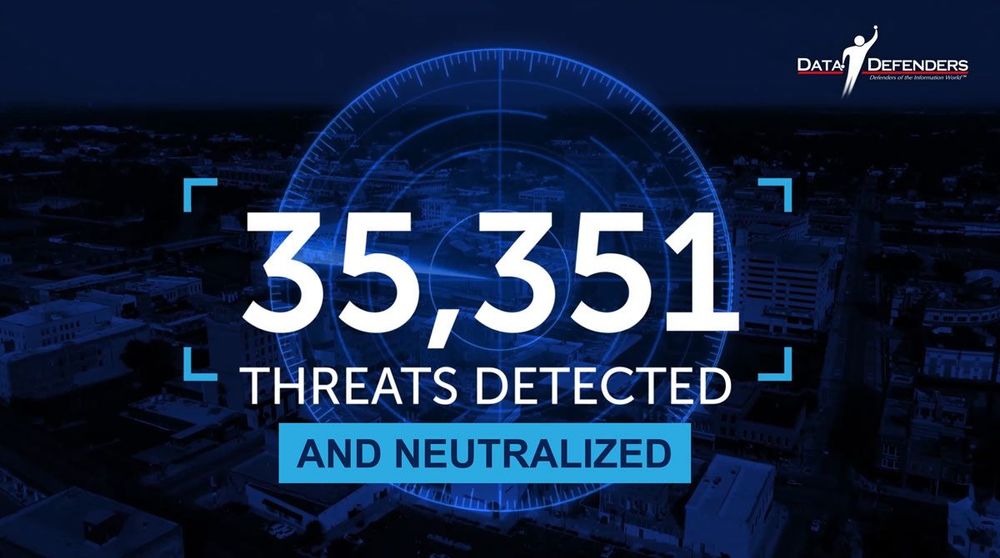
The City of Aurora, Illinois implemented an MCOP model and achieved the following documented outcomes: over 35,000 threats detected and mitigated, 351 high-severity threats eliminated, zero major security incidents, and a 77% reduction in cybersecurity operational costs. These results were achieved not by purchasing better tools but by shifting from reactive tool management to a coordinated, continuous security operation.
The City of Aurora, Illinois faced the exact challenges described in this article. Limited budgets. A workforce market that could not fill the positions the old model required. Rising cyberattacks against municipal infrastructure. And a security posture built on the assumption that adding more tools and more managed monitoring would be enough.
By implementing an MCOP model with integrated platforms and operations-first design, Aurora achieved results that demonstrate what the shift from reactive tools to coordinated operations actually produces:
- Over 35,000 threats detected and mitigated
- 351 high-severity threats eliminated
- Zero major security incidents
- 77% reduction in cybersecurity operational costs
These results did not happen because Aurora bought better tools. They happened because cybersecurity stopped being reactive and started operating as a coordinated, continuous system.
The Question for Your Organization

When you look back at the seven challenges: the misaligned strategies, the siloed lifecycle components, the overwhelmed teams, the workforce gaps, the cost barriers: they all share the same root cause. Cybersecurity has been built as a collection of parts, not as a unified operation.
The future of cybersecurity for SLTT governments, healthcare systems, and 501(c)(3) organizations is not about buying more tools or trying to hire people who do not exist in sufficient supply. It is about treating security as what it should have always been: a continuous, coordinated operation that protects what matters most.
Is your security built to just handle today's threats, or is it operating as a resilient system ready for tomorrow's challenges?
Sources & Methodology
Claims in this article are derived from the following sources:
- Data Defenders / Aurora, IL Case Study (2025): primary source for all Aurora outcome statistics: 35,000+ threats, 351 high-severity eliminated, zero major incidents, 77% cost reduction.
- Data Defenders internal research: source for the 95% municipality funding gap statistic.
- Cybersecurity workforce shortage figures reflect publicly reported estimates from ISC2 and CISA workforce gap analyses.
Methodology note: This article synthesizes the seven-challenge framework from a structured analysis of the Episode 8 podcast transcript, the Aurora case study, and Data Defenders operational research. All statistics are sourced from named studies or direct case study data and are not extrapolated from third-party estimates.
Frequently Asked Questions
What are the 7 cybersecurity challenges facing government and nonprofit organizations?
The seven challenges are: (1) security operations misaligned with business maturity, (2) disjointed information sharing between lifecycle components, (3) human element overwhelmed by data volume, (4) operations over-reliant on human processing capacity, (5) a structural cybersecurity workforce shortage, (6) point solution sprawl that adds complexity without proportional protection, and (7) cumulative costs that make the status quo financially unsustainable for most mission-critical organizations.
What is the most common reason cybersecurity programs fail at SLTT governments and nonprofits?
The most common reason is model misalignment, security operations never calibrated to the organization's actual business maturity and resource constraints. The seven challenges compound against each other, but they all trace back to a program built as a collection of independent parts rather than a unified, continuous operation. Buying more tools or adding managed monitoring does not solve a model problem.
What is the difference between an MSSP and an MCOP?
A Managed Security Service Provider (MSSP) monitors a network and sends alerts; when an alert fires, the response burden returns to the client organization's internal team. A Managed Cybersecurity Operations Provider (MCOP) operates as a continuous security function: 24/7/365 monitoring, proactive threat hunting, automated response, and coordinated remediation. The MCOP model handles the response rather than handing it back. This distinction is critical for organizations with lean teams that cannot sustain round-the-clock response capacity.
What is Cybersecurity Operations 2.0?
Cybersecurity Operations 2.0 is Data Defenders' operational framework that integrates governance, technical infrastructure, and process and procedure into one continuous lifecycle. It functions as the operating system for the MCOP model, removing the dependency on overwhelmed humans at the correlation and triage layer, and generating the continuous, auditable evidence trail that boards, auditors, and regulators require.
How does Cybersecurity Operations 2.0 address the workforce shortage?
Cybersecurity Operations 2.0 removes the human element from the correlation and triage layer, the function that generates the most data-processing burden and alert fatigue. By automating what can be automated, it frees security professionals to focus on judgment-intensive work: strategic decisions, governance oversight, incident management, and stakeholder communication. Organizations can do more with the staff they have rather than depending on a talent market that cannot supply what the old model demands.
What did the City of Aurora achieve with an MCOP model?
The City of Aurora, Illinois detected and mitigated over 35,000 threats, eliminated 351 high-severity threats, achieved zero major security incidents, and reduced cybersecurity operational costs by 77%, by shifting from a reactive, tool-centric approach to a coordinated, operations-first model under Data Defenders' MCOP framework.
Is the MCOP model only for large municipalities or hospitals?
No. The MCOP model was specifically designed for mission-critical organizations operating under real-world resource constraints, including smaller municipalities, regional healthcare systems, and 501(c)(3) nonprofits. The Regional SOC Utility model treats cybersecurity as shared infrastructure, making enterprise-grade protection economically accessible to organizations that cannot build it independently.
What is the cybersecurity lifecycle and why does alignment matter?
The cybersecurity lifecycle consists of three integrated components: governance and policy, technical infrastructure, and process and procedure. When these components are implemented independently, at different times, under different leadership, with different priorities, they become misaligned with each other and with the organization's actual security maturity. That misalignment creates exploitable gaps. Lifecycle alignment means all three components are calibrated to each other and to where the organization actually is, not where it was when each component was first implemented.
Why can't most municipalities fund adequate cybersecurity?
Ninety-five percent of US municipalities cannot adequately fund the capital and operational requirements the traditional cybersecurity model demands. The model requires technical controls, skilled workforce staffing, governance infrastructure, and ongoing maintenance, all of which carry separate costs that compound over time. A workforce shortage that drives talent premiums upward adds further pressure. The model was not designed with resource-constrained public institutions in mind, which is why alternative operating models like the Regional SOC Utility approach exist.
How does the MCOP model handle compliance and audit requirements?
The MCOP model generates continuous, auditable evidence of security operations as a built-in function, not as a separate compliance exercise. Because the operation runs continuously and logs all detection, response, and remediation activity, organizations have documented proof of due diligence available on demand rather than assembled reactively before an audit. This directly addresses the audit-season scramble that fragmented security programs produce when components do not share data or maintain unified records.
Glossary
Key terms used in this article:
MCOP (Managed Cybersecurity Operations Provider):
A security operations model that provides continuous, end-to-end protection, including 24/7/365 monitoring, proactive threat hunting, and coordinated response, as a unified operation rather than a monitoring-and-alert service. The MCOP model is designed to replace the traditional MSSP as the primary managed security relationship for mission-critical organizations.
MSSP (Managed Security Service Provider):
The traditional managed security model, which focuses primarily on network monitoring and alert generation. Under the MSSP model, the burden of incident response typically returns to the client organization's internal team when an alert fires, making it functionally an alarm system rather than a security operation.
SLTT (State, Local, Tribal, and Territorial):
A classification used by federal agencies and cybersecurity frameworks to refer to non-federal government organizations. SLTT organizations are a primary target audience for Data Defenders' MCOP model and Regional SOC Utility because they face enterprise-level threats with significantly constrained resources.
Cybersecurity Operations 2.0:
Data Defenders' operational framework integrating governance, technical infrastructure, and process and procedure into a single continuous lifecycle. It functions as the operating system for the MCOP model and removes the dependency on human processing capacity at the correlation and triage layer.
Regional SOC Utility:
A shared infrastructure model for cybersecurity operations in which multiple mission-critical organizations access enterprise-grade security operations through a shared, professionally operated regional hub, similar to how utilities provide water or power as shared infrastructure rather than requiring each building to generate its own.
Point solutions:
Individual cybersecurity tools that address specific threat vectors or security functions independently of each other. Point solution sprawl occurs when an organization accumulates multiple tools that do not integrate, creating redundant costs, data silos, and additional burden on the human element.
Threat hunting:
A proactive security practice in which analysts actively search for threats that have evaded existing automated controls, rather than waiting for alerts to indicate a problem. Proactive threat hunting is a component of the MCOP model that the traditional MSSP approach does not include as a standard function.
Cybersecurity lifecycle:
The integrated operational cycle consisting of governance and policy, technical infrastructure, and process and procedure. When these components are aligned and communicate with each other, they form a functional security operation. When they are misaligned or siloed, they create the conditions for Challenges 1 and 2 described in this article.
Related Resources
- City of Aurora Case Study — 351 High-Severity Threats Eliminated, Zero Major Incidents. Case study
- The Cyber Resilience Report, Episode 8
- The MCOP Model: The Future of Managed Security
About Data Defenders
Data Defenders is a Managed Cybersecurity Operations Provider (MCOP) built for mission-critical organizations that face enterprise-level threats without enterprise-level resources. Unlike traditional Managed Security Service Providers (MSSPs) that monitor and alert, Data Defenders operates as a continuous security operation, delivering 24/7/365 threat detection, proactive threat hunting, and coordinated incident response through our Cybersecurity Operations 2.0 framework. We serve SLTT governments, municipal healthcare systems, and 501(c)(3) nonprofit organizations through Co-Managed Security Operations and symmetrical partnerships that keep governance and strategic direction with the client while we provide continuous operational defense.
Protect and Secure What Matters®